
IS THE TRIGON TAKING COMBAT SPORTS ENTERTAINMENT TO THE NEXT LEVEL?
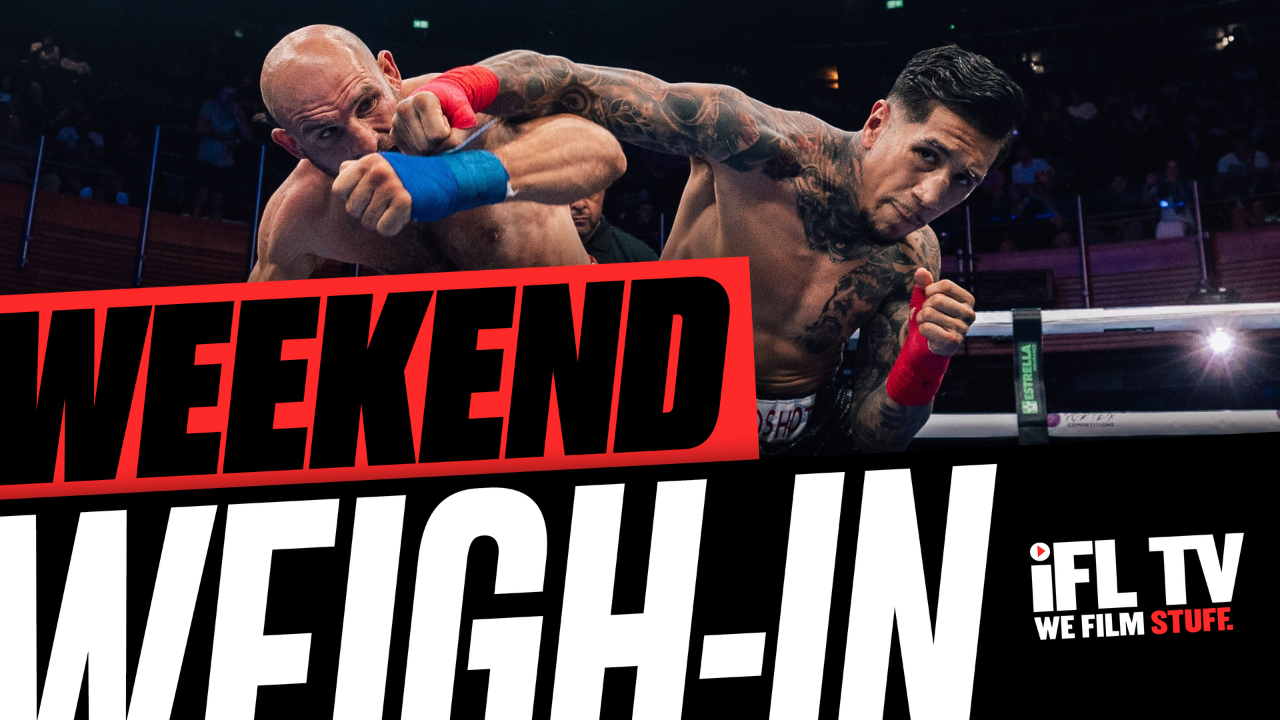
Combat sports have been around for quite literally thousands of years, but in recent times, an old favourite has reignited the bloodlust of many, and it only seems to be getting bigger and better with every show.
Dating back to the 18th century, bare-knuckle boxing is one of the oldest modern-day combat sports.
As the years have gone on and health and safety has become increasingly important, the sport suffered a bit of a lull. However, it's now arguably bigger and better than ever due to its legalisation in some of the biggest fighting countries in the world.
BKB Bare Knuckle Boxing President Mike Vazquez explained to us the growth of the sport over the past five years.
“Our first UK show was in 2021. We’ve seen a vast increase in fighters and boxers interested in the sport, not just brawlers anymore, and there is now more acceptance from the media and medical professionals regarding the fact that gloves actually cause more head and brain damage.”
BKB Bare Knuckle Boxing has become one of, if not the biggest, players in bare-knuckle boxing since a merger between America's BYB Extreme and the UK's BYB, both of which were founded in 2015. The two brands officially became one at the start of 2025, creating the promotion now known as BKB Bare Knuckle Boxing.
This isn't an ordinary promotion with fights contested in a traditional ring. Instead, bouts are fought in a Trigon.
The Trigon consists of a triangular-shaped fighting area with three sides and a total surface area of around 125 square feet — nearly 300 square feet smaller than a standard championship boxing ring and around two-thirds smaller than the 'squared circle' used by BKB Bare Knuckle Boxing's rival, BKFC.
BKB didn't introduce this by fluke. It's all for entertainment purposes, and it's easy to see why.
As of today, 48 of the last 57 fights across BKB's previous five shows have ended inside the distance. That's an astonishing 84%.
The majority of combat sports fans these days crave blood and that wow factor, and that's exactly what BKB provides with its Trigon.
Fighters have less space to move, meaning that from the opening bell it quickly becomes a war of attrition with nowhere to escape.
“The Trigon was developed for several reasons. First, to provide an identifiable fighting surface that was distinct to our organisation, rather than fighting in a square ring or cage. Secondly, to create tight corners and a fighting surface that would force the action to the centre of the ring.”
Another interesting element is the clash of contrasting styles. Bare-knuckle boxing has increasingly become a destination for retired professional boxers and former MMA fighters to try their hand at a new sport, as we've seen with the likes of Lee Selby, Lucas Browne, Mike Perry and Darren Till and most recently the Vargas brothers, sons of the legendary Fernando Vargas, to name just a few.
“We are seeing it happening. The Vargas brothers are the first, but many more fighters are seeing bare knuckle as an opportunity compared to the politics in boxing limiting opportunities. Early on it was MMA fighters who were attracted to the sport, but now more boxers are seeing the opportunity to take off the gloves. MMA guys gravitated to the clinch much faster, but boxers are catching up.”
Perhaps the best example of a current professional boxer successfully turning their hand to bare-knuckle while continuing their boxing career is Cuban heavyweight sensation Gustavo Trujillo.
With a professional boxing record of 12-0 with 11 KOs and ranked in the WBO's top 15, he's also 8-0 in bare-knuckle boxing, with all eight victories coming by first-round stoppage. Quite incredible.
The safety element of bare-knuckle boxing has always been a concern, but recent studies suggest it's just as safe, if not safer, than gloved combat sports.
Aesthetically, it's certainly worse in terms of cuts and blood, but internally it's quite the opposite. Studies suggest that acute concussions with symptoms are reported less frequently in bare-knuckle bouts (around 2.8%) compared to some gloved boxing cohorts (around 12.3%).
Traditional boxing gloves protect the hands, allowing athletes to absorb hundreds of heavy, repetitive impacts to the head over 12 rounds, leading to a higher cumulative risk of chronic traumatic encephalopathy (CTE).
“The fact is that gloves actually cause more head and brain damage than bare knuckle, where injuries are lower compared to boxing and MMA. The only area that’s higher is cuts, which get stitched up. That’s superficial damage compared to brain damage.”
One of BKB Bare Knuckle Boxing's biggest signings over the past six months has been securing former BKFC heavyweight champion Mick Terrill.
With an 11-2 record, all 11 victories coming by stoppage, Terrill is widely regarded as one of the most feared men in bare-knuckle boxing.
Mick explained to us why he believes active professional boxers would find the transition to bare knuckle much easier than they might expect.
“There’s not much difference in the games. Let’s say pro boxing is like running the 800 metres and BKB is like running the 100 metres. The 800m runner can definitely run the 100m because he can run the 800m. They might not be as explosive out of the blocks, but they have the skill and precision to control and end a fight once the sprinter tires.”
With the sport growing at a remarkable rate, the demand for fighters across every weight division continues to increase. BKB Bare Knuckle Boxing fighter liaison officer Ian Mozzy exclusively revealed to us the thought process behind signing fighters and what they look for.
“Experience, background and a good record in a professional combat sport. A professional bare-knuckle fighter should train consistently at a high level, be medically cleared, and be reliable and trustworthy, We look for character too. As bare knuckle is growing faster than ever on a worldwide scale, the ability to promote yourself on social media is a must.”
In terms of the grassroots side of the sport, BKB Bare Knuckle Boxing is already laying the foundations and creating a pathway for the future stars of bare-knuckle boxing.
“We are developing hybrid gloved events to develop younger fighters before they move on to bare-knuckle.
”
With the future of BKB Bare Knuckle Boxing looking bright, Vazquez gave us an insight into the company's plans for the immediate future.
“More big names from both boxing and MMA will be announced in the coming weeks. A string of shows in Mexico to complement our UK and US shows. More high-level partnerships with boxing promotions around the world, such as Zanfer in Mexico.”
Bare-knuckle boxing is now well and truly here to stay, and with more and more investment pouring into this gladiatorial sport, don't be surprised to see it eventually become a genuine rival to traditional boxing and lure some of the best fighters away from the gloved code.