
POWER OR PRECISION: FURY OUT TO TAME A RUSSIAN BEAST ON RING RETURN
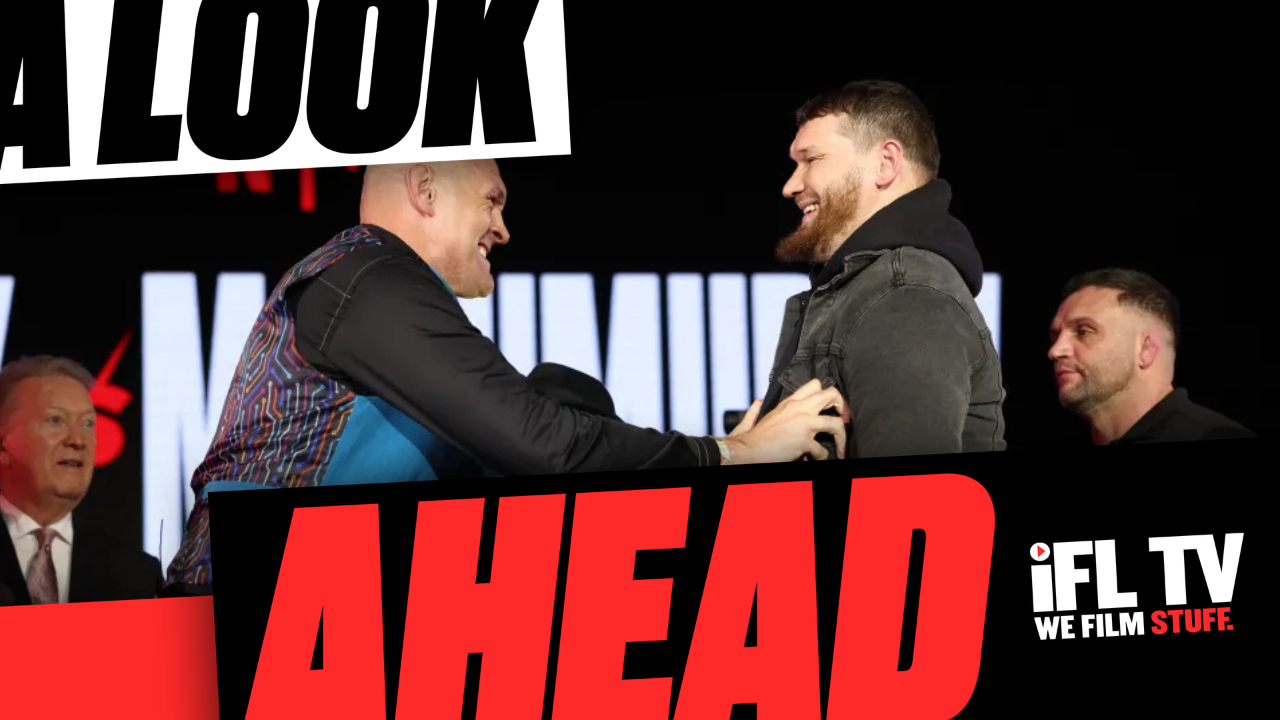
The Gypsy King Tyson Fury returns to the ring for the first time in over a year this Saturday night as he heads back to Tottenham Hotspur Stadium to face the dangerous, hard-hitting Russian, Arslanbek Makhmudov.
After suffering back-to-back defeats to Oleksandr Usyk, Fury shocked the boxing world by announcing his retirement from the sport. However, that retirement hasn’t lasted long, and he now begins his journey towards becoming a three-time world champion this Saturday night.
One of the most iconic figures in heavyweight boxing—not just over the past 15 years but arguably ever—Fury’s career has been nothing short of Hollywood movie-worthy.
From being born prematurely and weighing just one pound to becoming a 6ft 9in, 250lb+ heavyweight champion of the world, it’s the type of story that not even the likes of Steven Spielberg or Martin Scorsese could imagine.
With unforgettable victories along the way over the likes of Wladimir Klitschko, Deontay Wilder—on two occasions—and Derek Chisora—on three occasions—as well as countless highlights both inside and outside the ring, Fury will, when he eventually hangs up the gloves for good, go down as a heavyweight great.
He likes to do things the hard way, though, and on Saturday night he does exactly that by taking on one of the most intimidating men in the heavyweight division, Arslanbek Makhmudov.
A man who has gone about his work far more quietly than Fury, the dangerous Russian has climbed the heavyweight ranks, with his record currently standing at 21–2.
Nineteen of those victories have come by way of stoppage, with his most recent coming against everyone’s favourite “White Rhino”, Dave Allen, on away soil in England.
He is a man with everything to gain and nothing to lose, and he will certainly be looking to cause a major upset on Saturday night.
So, to the fight—and where it will be won and lost.
Many believe this will be relatively straightforward for Fury on his return, but against a man who has won 19 of his 21 fights by stoppage—with 17 of those coming inside the first four rounds—the last thing it will be is straightforward.
First, let’s look at the size difference. Fury has a three-inch height advantage, standing at 6ft 9in compared to Makhmudov’s 6ft 6in, but the most telling physical statistic is the difference in reach.
Despite the three-inch height difference, there is a seven-inch difference in reach. For his height, Makhmudov has unusually short arms at 78 inches, which, to put into context, is the same reach as former super-middleweight—and now light-heavyweight—champion Callum Smith, and one inch less than super-welterweight champion Sebastian Fundora.
This will obviously play massively into Fury’s favour.
Having not boxed for over a year, Fury will need to be patient early on and use that reach advantage as much as possible.
Makhmudov is relatively easy to hit, with minimal leg movement and a heaviness on his feet. Against someone with Fury’s jab and footwork, he could become something of a sitting duck.
However, that same heaviness brings danger. Makhmudov tends to start fast and throws every shot with knockout intent. If there is any ring rust from Fury, Makhmudov will likely look to exploit it, meaning Fury must be mentally sharp as well as physically prepared.
Another factor that could both trouble Fury and work in his favour is the width of Makhmudov’s punches.
Aside from his stiff jab, most of his shots are thrown wide. This leaves him open down the middle for Fury’s more technically refined punches, but with Fury’s tendency to lean back with his chin high, it also makes him vulnerable—especially if he struggles to find his rhythm early in the fight.
When Makhmudov throws his powerful straight hand, he commits fully, often falling in with the shot. This leaves him open to counters such as the uppercut Fury used to stop Dillian Whyte. However, it also means that if an opponent misses a counter, it could be lights out—it’s very much an all-or-nothing punch.
The game plan is relatively simple for both fighters.
For Makhmudov, he must start fast and look to take Fury out with every punch. Some level of ring rust is inevitable for Fury, and the Russian must capitalise on any signs of it, because the longer the fight goes, the more it will favour Fury.
For the Gypsy King, the task is to weather the early storm and break Makhmudov down in the later rounds.
Makhmudov has shown vulnerability to body shots—having been stopped by Agit Kabayel—and he tends to head-hunt, neglecting body work. This is something Fury does not need to worry about too much.
For a man of his size, Fury’s body punching is exceptional.
If he works effectively to the body without being caught upstairs, he could make the fight look straightforward and secure a late stoppage or a comfortable points victory. However, Fury cannot afford to switch off or become complacent at any stage.
Even as Makhmudov fades, his power remains dangerous until the final bell.
If this were an active, in-form Tyson Fury, many would see this as a mismatch—and perhaps they still do—but this is not that version of Fury.
Tyson Fury 3.0 could yet prove to be the best version we have ever seen, but Father Time is undefeated, and against a legitimate heavyweight threat like Makhmudov, he cannot be overlooked.